Passiflora subrotunda
Mast. (1872)


SUBGENUS: passiflora
SUPERSECTION: stipulata
SECTION: granadillastrum
GEOGRAPHICAL DISTRIBUTION OR ORIGIN:
Northeastern Brazil.
CRITICAL MINIMUM TEMPERATURE: 8 °C
IDEAL MINIMUM TEMPERATURE: 12 °C
SYNONYMS: P. barbosae Barb. Rodr.
ETYMOLOGY: From the Latin subrotunda, almost round with reference to the shape of the leaves.
The sub prefix in botanical etymology means 'almost'.
DESCRIPTION:
Passiflora subrotunda is a typically Brazilian species from the Atlantic side of the country, linked to the north-eastern coastal zone. It grows near the sea, among the vegetation of the restinga and the dunes behind the beaches, where the soil is sandy, poor and well drained, the wind blows steadily and the sun beats down for hours. In these dry, salty landscapes it climbs discreetly over low shrubs or spreads among the coastal thickets, finding shelter within the folds of the vegetation and regaining vigour regularly after the rains.
It is a neat and orderly plant in habit, with slender and flexible stems that twine gently around their supports. The leaves are entire, small, slightly leathery, deep green and glossy, with a smooth margin and a rounded tip.
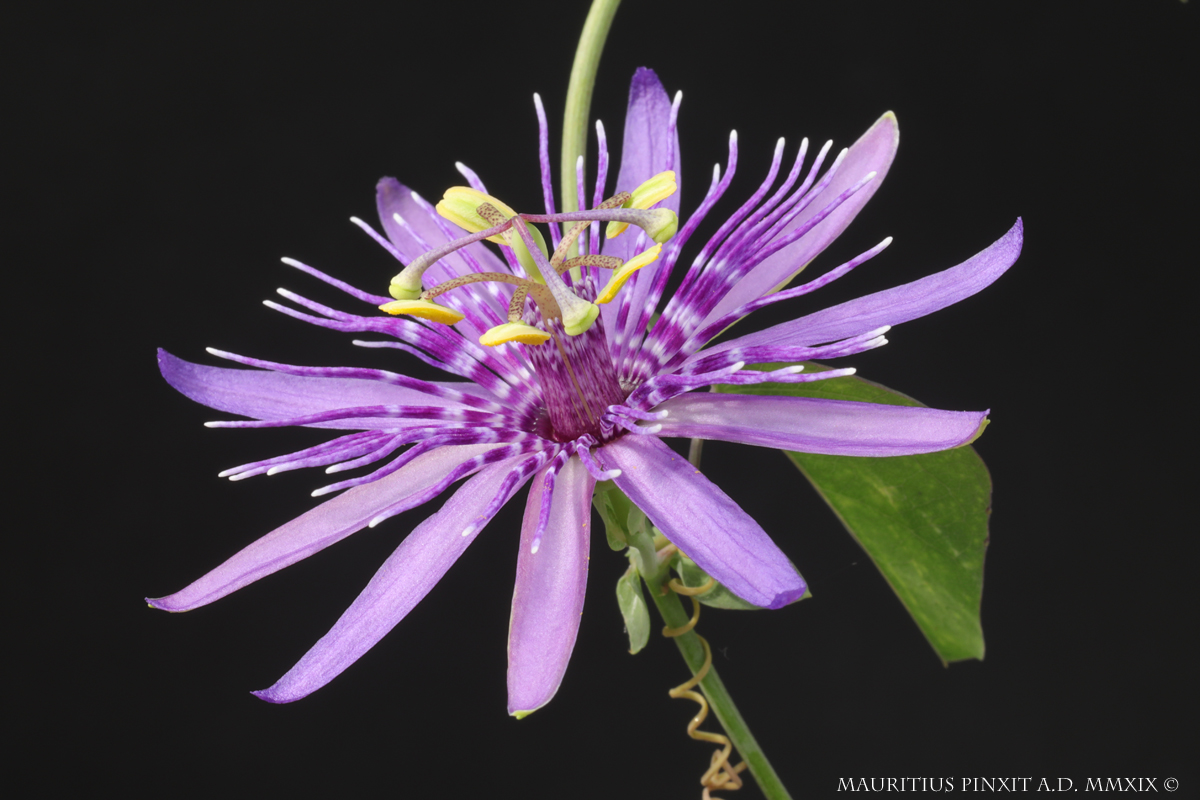
The flowers are highly distinctive within the genus Passiflora, combining shapes and colours that give them a unique appearance. The corolla is of a warm, bright violet, while the corona shows the same tone in a darker shade, crossed by thin pale bands, almost white, most evident in the central part of the flower. Together these create a harmonious contrast that highlights the structure and depth of the corolla. Petals and sepals are thin and slightly elongated, arranged regularly so that the flower appears open and light. The diameter is rather small, not exceeding five centimetres, but the proportions of the parts maintain a perfect balance between elegance and simplicity.
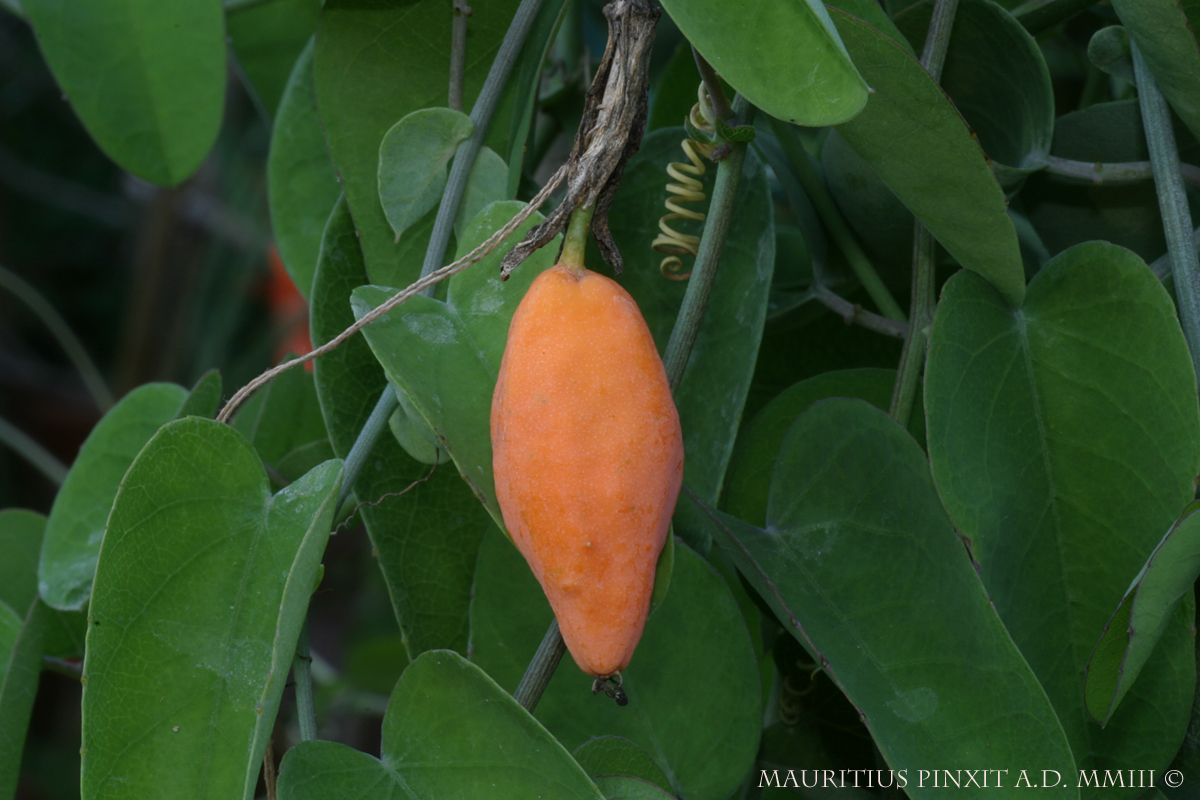
The fruits are also distinctive within the genus Passiflora. Their colour is a deep, uniform orange, while the shape, quite unusual, is ovoid and elongated, with the lower end slightly narrowed, almost like a tiny inverted pear.
Flowering is fairly long-lasting and, in favourable conditions, may continue for much of the year, with peaks during warm and humid periods. In cultivation Passiflora subrotunda shows good adaptability and grows well in large pots, provided the soil is loose, well drained and kept slightly moist. It appreciates full light but also performs well in bright partial shade, where it continues to flower regularly.
Observations made on greenhouse-grown specimens have shown that greater light intensity increases flower production and improves pollen quality while maintaining the consistent colouring of the corona. For this reason, the species is also considered of interest for ornamental hybridisation programmes.
Overall, Passiflora subrotunda is an elegant and decorative plant, sober yet harmonious, combining simplicity with grace. Reliable and consistent, it is particularly appreciated by growers who prefer tidy and well-balanced species rather than those with a more immediate visual impact.
Propagation can be carried out from cuttings, which root readily in warm and humid conditions, or from seed, which germinates reliably if fresh.
In cultivation it shows moderate hardiness, tolerating brief drops in temperature to around 5 °C, provided the soil remains dry. In colder regions it should be sheltered during winter and kept in a greenhouse or other bright, protected environment.