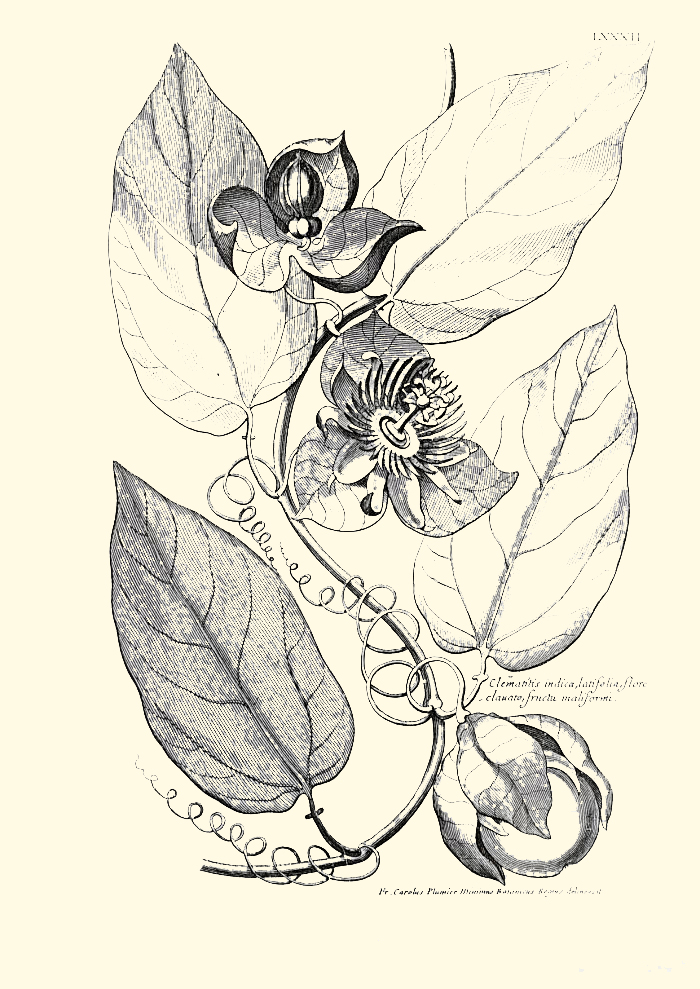
Over time, unfortunately, Passiflora mucugeana was lost. More recently, a Brazilian correspondent of mine tried to find it again in its native area, but without success. The forest where it once grew, near Mucugê in the state of Bahia, has been destroyed and no trace of the species remains. I fear it must now be considered extinct, unless it still survives in some protected area within the Chapada Diamantina National Park. I have not, however, given up hope of rediscovering it.
In the wild it grew at altitudes between 1000 and 1200 metres, in the campos rupestres of the Espinhaço range, upland environments of quartzitic rocks and sandy, well-drained soils interspersed with patches of semi-deciduous forest. The climate is tropical at elevation, with rains concentrated in the warm season and a drier period during the winter.
It is not currently known to be in cultivation in Europe. The leaves have a distinctive and rather curious shape, with three almost symmetrical lobes reminiscent of the Mercedes emblem, sharply pointed and of equal length. The flower, of a delicate pale violet, bears a dense corona of slender filaments arranged in alternating purple and white bands at the centre, shading into a uniform violet towards the white tips. Also striking is the orange hue of the staminal filaments, unusual among passifloras of this group.
In cultivation it had proved easy, adaptable, and generous in flowering. It preferred warm temperate conditions, with winter minima not below 10 °C, abundant light, and a sandy, well-drained substrate. It tolerated short dry spells but benefited from regular watering during its growth phase.
Now a rare and perhaps vanished species, Passiflora mucugeana remains for me a cherished memory — the quiet trace of a discreet beauty born on a distant plateau and now preserved only in the recollection of those who once saw it bloom.