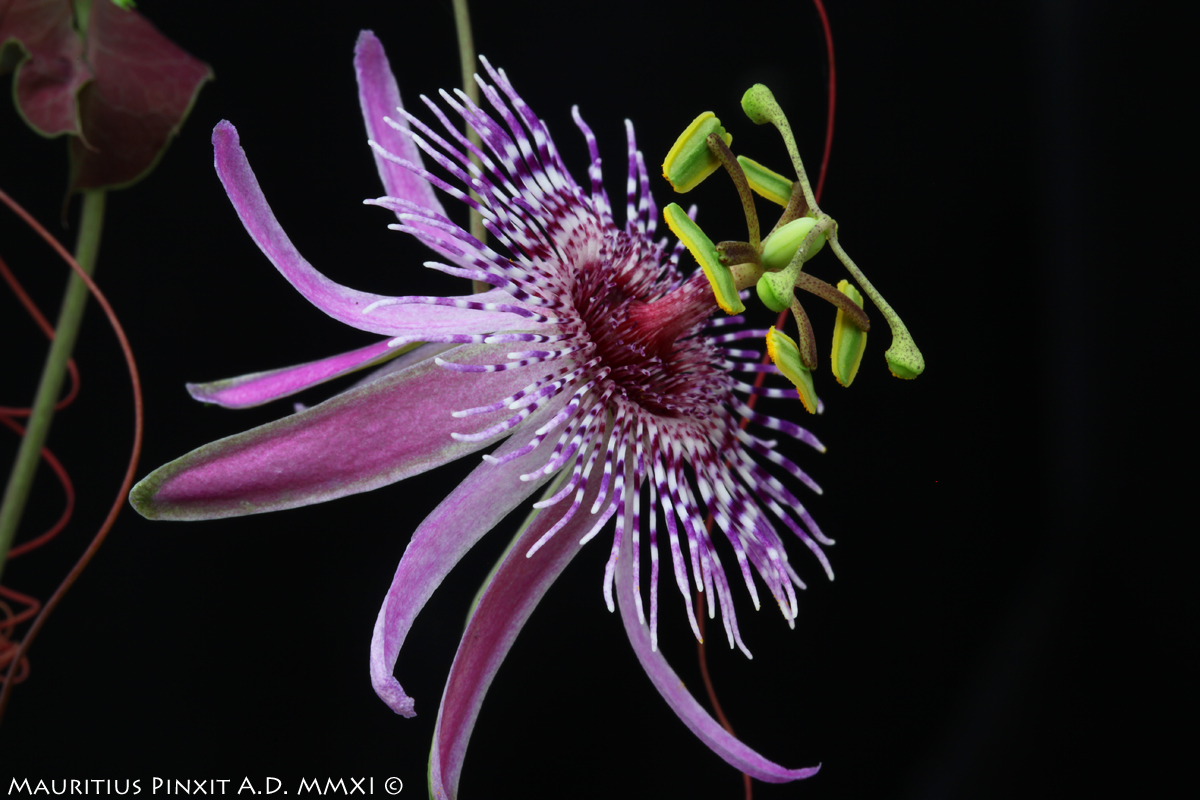
Passiflora miersii
Mart. (1872)


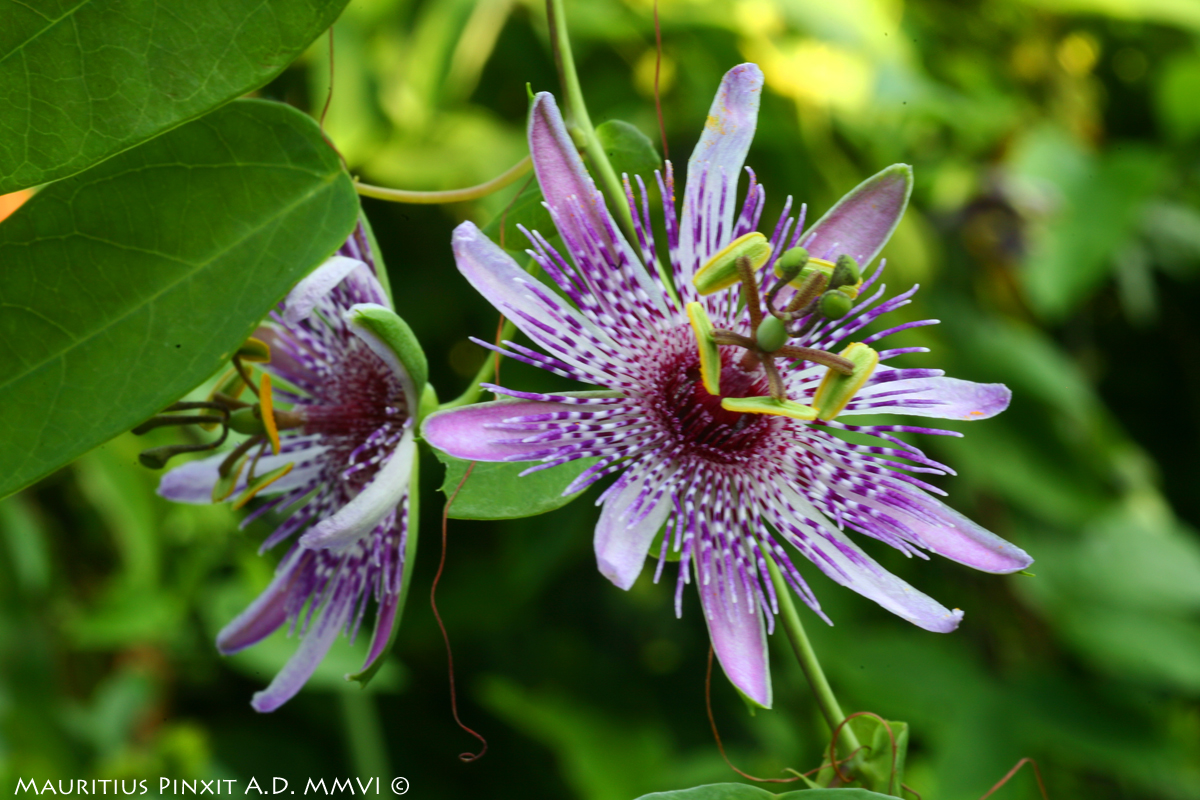
SUBGENUS: passiflora
SUPERSECTION: stipulata
SECTION: kermesinae
GEOGRAPHICAL DISTRIBUTION OR ORIGIN:
Brasile From Minas Gerais to São Paulo.
CRITICAL MINIMUM TEMPERATURE: 10 °C
IDEAL MINIMUM TEMPERATURE: 12 °C
ETYMOLOGY: Dedicated to the English botanist John Miers (1789 - 1879), known for his studies on the flora of Chile and Argentina.
DESCRIPTION:
The flower of Passiflora miersii is refined in its structure and in the balance of its colours. The corolla is composed of slender, delicate sepals and petals that curve slightly backwards, while the corona consists of several series of filaments, the main ones marked by dense alternating bands. The dominant colour is lavender, with shades ranging from lilac to light violet depending on the light and the stage of opening.
Almost in contrast with the liveliness of the flower is the simplicity of the small leaves, entire, with a rounded base and an acute tip, which bring balance to the overall appearance of the plant.
Passiflora miersii is a typical species of the Mata Atlântica, the great coastal biome of south-eastern Brazil, now fragmented among the states of Rio de Janeiro, Minas Gerais and Espírito Santo. It grows on the humid slopes of the Serra do Mar and the Serra da Mantiqueira, at low altitudes, in hill or mountain rainforests. The environment is constantly humid, with rainfall distributed throughout the year and mild temperatures. The species grows among secondary vegetation and along the edges of clearings, where the light is filtered and the small branches of shrubs provide natural support.
Because of its ease of cultivation and regular flowering, it has become established in European and American collections. It is a plant of modest size, suitable for growing in pots or hanging baskets. It requires minimum temperatures above 10 °C, a well-drained universal potting mix and regular but moderate watering. It prefers bright light, with direct sun only during the cooler hours, and it flowers throughout the warm season if kept in good light and fed with light, consistent fertilisation.
It is an adaptable species that can be grown outdoors in mild climatic areas such as the Ligurian Riviera, southern Italy and the coastal zones around the great Lombard lakes.